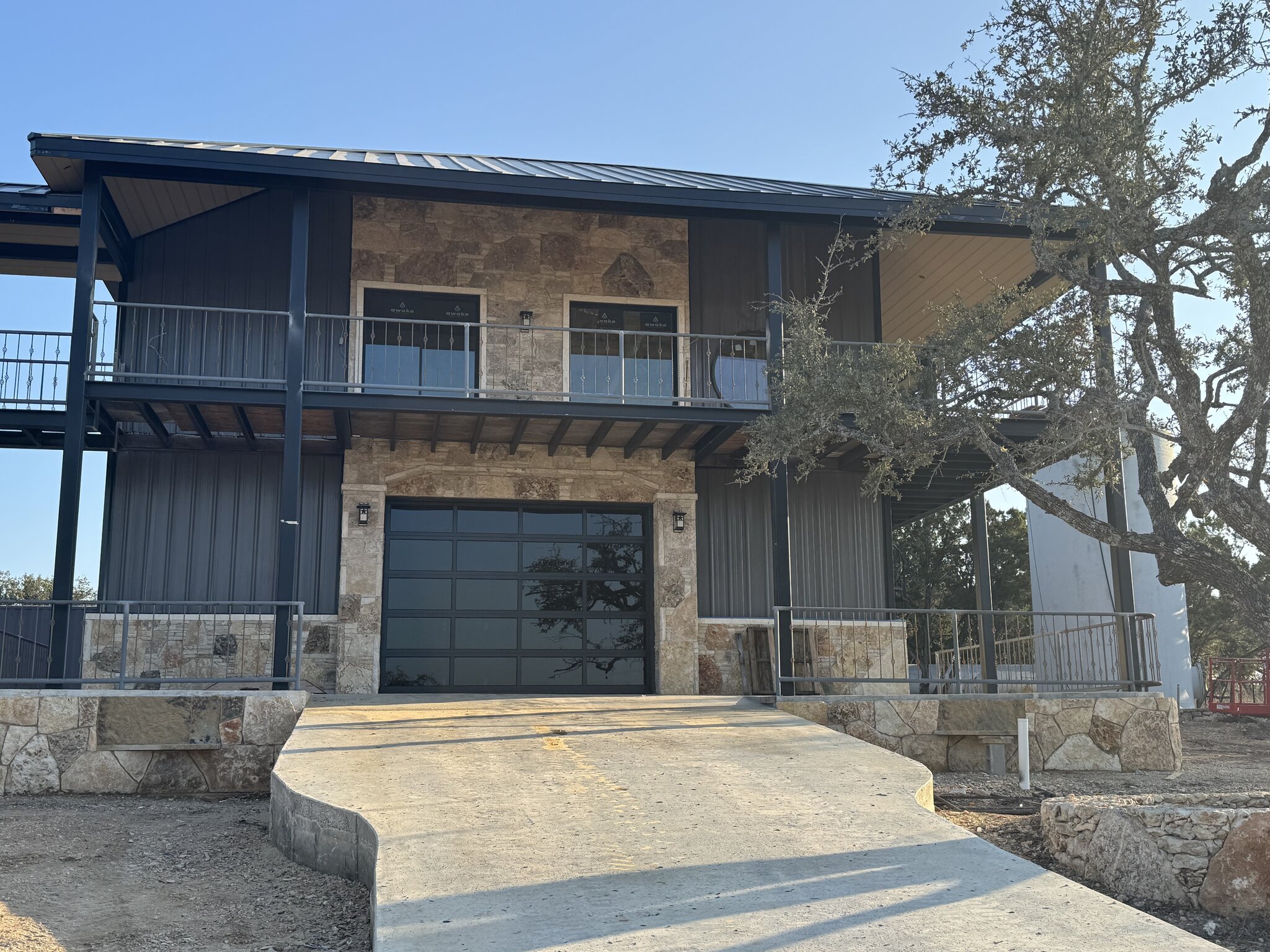
For most Wimberley business owners, the honest answer is “it depends on your cash, your timeline, and how long you plan to stay.” Building and owning your commercial space builds equity and gives you tax advantages and full control. Leasing keeps more cash free and lets you move or scale faster. The right call comes down to your numbers, not a slogan.
Build or lease in Wimberley: the short version
Owning wins on equity, control, and long-term tax treatment. Leasing wins on lower upfront cash and flexibility. The deciding factor is usually how long you will stay put. If you are anchored in Wimberley for the next decade and have the down payment, owning often pays off. If you are still testing a location or growing fast, leasing buys you room to change your mind.
Here is the part people miss: owning your building does not always require the cash they assume. Government-backed financing exists specifically for owner-occupied commercial real estate, and we will get to that below. First, the case for each side.
What building and owning gets you in Wimberley
When you own, every payment builds equity instead of disappearing as rent. The U.S. Small Business Administration designed its flagship commercial real estate program around exactly this idea: helping owner-occupied businesses buy or build the space they operate from, per the SBA 504 loan program (2025). Rent is a pure expense. A mortgage is part expense, part forced savings.
Ownership also gives you control. You decide on the layout, the loading dock, the ceiling height, the electrical capacity, and whether you can expand in five years. For a lot of Hill Country businesses, a warehouse, shop, or restaurant has to be built to fit the work, not squeezed into whatever happens to be available for lease near Wimberley. When you build, you start from your operation and design backward. That is how we approach commercial builds for Wimberley owners, from site and layout through finish-out.
There is an appreciation angle too. Land and buildings in a growing market can gain value over time, though that is never guaranteed and depends on the local market. None of this is tax or investment advice, so confirm the numbers with your own advisors. The point is simply that owning keeps the upside, while leasing hands it to the landlord.
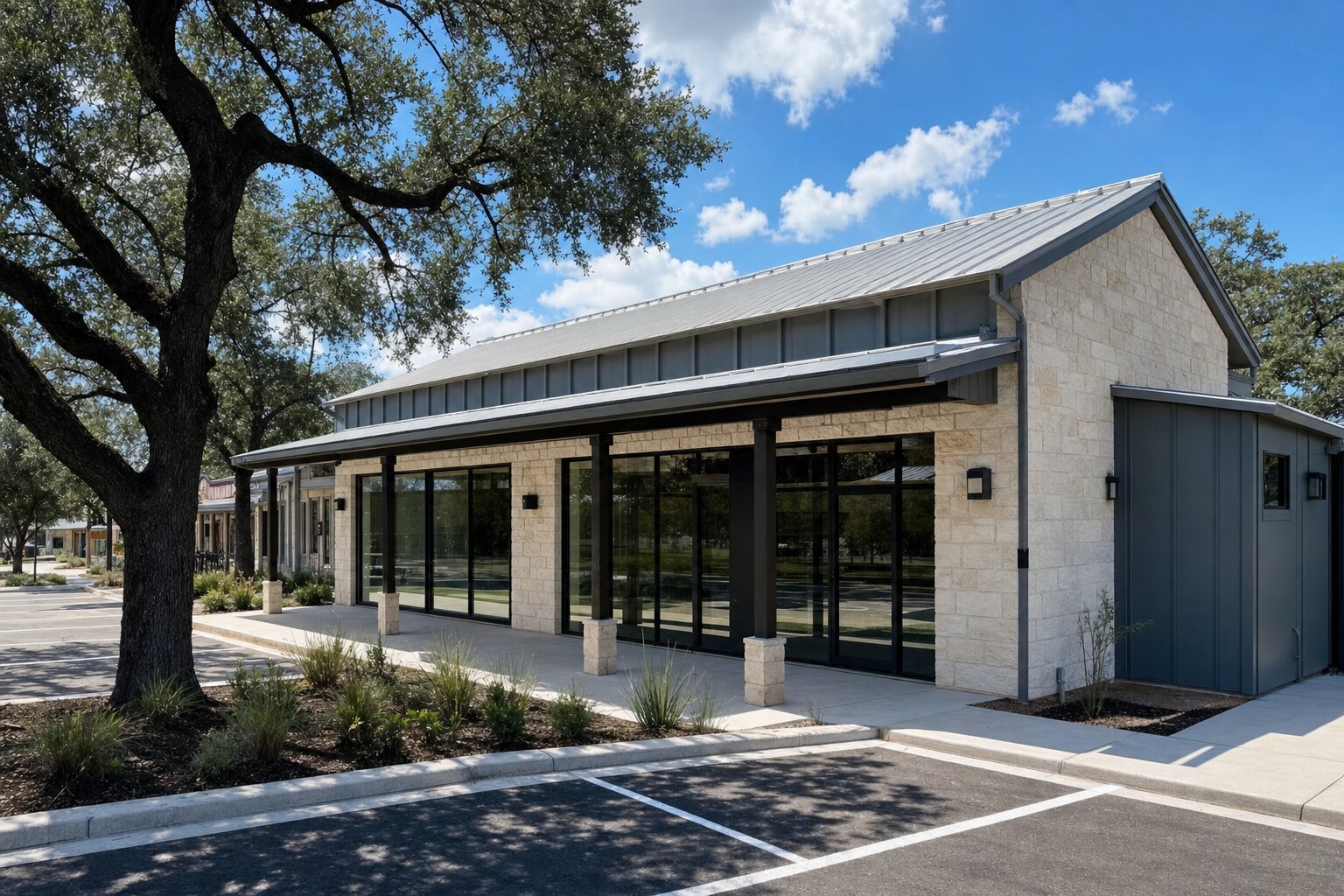
Where leasing makes the most sense
Leasing is the smarter move more often than builders like to admit. It preserves capital. Instead of tying up cash in a down payment, closing costs, and a construction timeline, you keep that money working in the business: inventory, payroll, equipment, marketing. For a young or fast-changing company, liquidity can matter more than equity.
Leasing also keeps you flexible. If you are not sure you will still want this exact spot in three years, a lease lets you relocate or scale up without selling a building first. New businesses, seasonal operations, and companies testing whether Wimberley is the right base often lease on purpose. There is no shame in renting while you figure out the long game.
The tradeoff is real, though. Every lease payment is gone for good, you live with the landlord’s rules, and your rent can climb at renewal. Flexibility has a price, and that price is the equity and control you give up.
How SBA 504 financing changes the build-vs-lease math for Wimberley owners
A lot of owners assume building means a huge down payment, so they default to leasing. That assumption is often wrong. The SBA 504 loan is typically structured 50/40/10: a lender covers at least 50 percent, a Certified Development Company covers up to 40 percent with an SBA guarantee, and the owner puts down as little as 10 percent, according to the SBA (2025). Ten percent down on owner-occupied space reshapes the whole comparison.
There are rules. The 504 program is for owner-occupied property, which means for an existing building your business must occupy at least 51 percent of it; it finances space you run your business from, not pure rental or investment property, per the SBA (2025). The maximum 504 loan is $5.5 million, and it funds real estate, land, new facilities, and long-term equipment, but not working capital or inventory, again per the SBA (2025).
We build the building. We do not originate loans. Talk to an SBA lender or a Certified Development Company about whether you qualify and what your terms would look like. But know that owning is frequently more reachable than the sticker price suggests. If you are weighing a ground-up project, our commercial construction team can help you scope a realistic budget before you ever talk to a lender.
The tax side: depreciation, Section 179, and QIP (CPA territory)
Owning a commercial building comes with tax treatment that renting simply does not. Nonresidential real property is depreciated straight-line over 39 years under MACRS, according to IRS Publication 946 (2025). You depreciate the building only, not the land, since land is not depreciable, per the same IRS guidance (2025). For an owner, that yearly deduction is a real benefit a tenant never sees.
There is also faster expensing for certain improvements. For 2025 the Section 179 maximum deduction is $2,500,000, phasing down dollar for dollar once you place more than $4,000,000 of property in service, per IRS Publication 946 (2025). Section 179 lets you expense qualifying property in the year you place it in service rather than depreciating it over many years, according to IRS Tax Topic 704 (2025).
Some building systems can qualify. Section 179 “qualified real property” can include nonresidential improvements such as roofs, HVAC, fire protection and alarm systems, and security systems, per IRS Publication 946 (2025). Qualified Improvement Property covers interior improvements made to a nonresidential building after it was placed in service, but it excludes building enlargements, elevators and escalators, and internal structural framework, according to IRS Tax Topic 704 (2025).
One firm warning: these are 2025 figures, and tax limits change every year. We are builders, not accountants. Run every depreciation and Section 179 question past your CPA before you bank on any of it.
How the Hill Country commercial market factors into your Wimberley decision
Local conditions belong in the math too. Nationally, commercial real estate cap rates rose through 2025, moving from roughly 5.9 percent early in the year to about 6.3 percent by year-end as borrowing costs stayed elevated, according to the CBRE U.S. Cap Rate Survey H2 2025. That is national brokerage context, not a Wimberley number, but it tells you financing climate shapes this decision as much as price.
On the ground, Wimberley and the surrounding Hill Country bring their own factors: limestone and caliche soils, sloped lots, well and septic on acreage, and county permitting in Hays and the counties around it. Available lease space in a small market can be limited and may not fit your operation. Building lets you put the right space exactly where your customers and crew already are. That local fit is often what tips an owner toward building here.
How to decide for your Wimberley business
Start with three questions. How long will you stay? How much cash can you commit without starving the business? And how specific are your space needs? Long horizon, available down payment, and a specialized building point toward owning. Short or uncertain horizon and a need to stay liquid point toward leasing.
Iron C Construction has built commercial projects across the Hill Country since Robert Castro founded the company in Wimberley in 2020, and we will tell you straight when leasing is the better play. We would rather give you honest both-sides advice than push you into a build you do not need. If you do decide to own, get a real construction budget early so your financing conversation starts from accurate numbers.
Thinking through whether to build or lease your next space? Talk with the team at Iron C Construction about commercial construction in Wimberley. We will walk the site, scope a realistic budget, and give you an honest read on what building would actually take, then point you to an SBA lender and your CPA for the financing and tax side.