
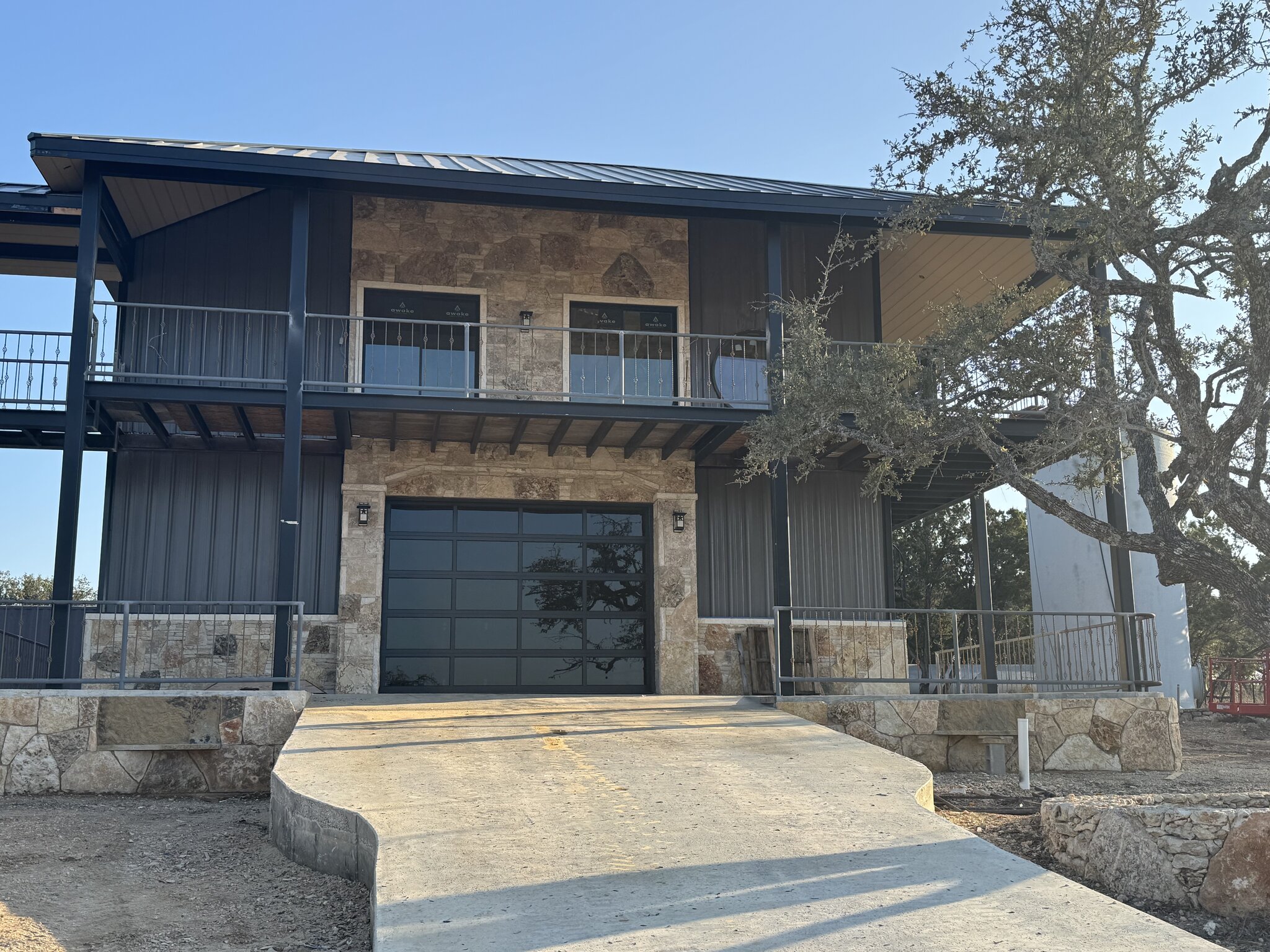
For most older Hill Country homes, a deep whole-home remodel is the smarter money because it keeps the character and avoids paying new-build prices per square foot. Rebuilding wins when the foundation or structure is failing, lead and asbestos cleanup stacks up, or the work would trigger full code compliance anyway. Here is how to tell which side you land on.
How big is this decision, really?
Americans spent roughly $450 billion on home improvement and repair in 2024, down slightly from about $481 billion in 2023, according to the Harvard Joint Center for Housing Studies (2024). That tells you something simple. Plenty of people are pouring real money into older homes, and a good share of them are guessing on the remodel vs rebuild house question instead of pricing it out.
An older home in Wimberley, Dripping Springs, or out on acreage near Blanco carries things a tract house does not. Limestone and caliche under the slab, well and septic systems, sloped lots, and decades-old framing. Those details swing the math. So before you fall in love with either a remodel or a clean rebuild, you price both against the same yardstick.
What does a rebuild actually cost per square foot?
The median contractor-built home cost about $166 per square foot to build in 2024, excluding land, per NAHB Eye on Housing (2025). That is your rebuild benchmark, and it is the number every remodel estimate gets measured against. When a remodel quote starts creeping toward new-build dollars per square foot, the rebuild starts making sense.
Here is the honest part. A remodel almost always pencils out cheaper than tearing down and starting over, because you keep the slab, the framing, the roof structure, and the systems that still work. You are not paying to rebuild what is already fine. A 2,400 square foot rebuild at $166 per foot runs close to $400,000 in hard construction cost before land and site work. A focused remodel of the same house often costs a fraction of that.
But “a remodel is cheaper” stops being true the moment you open the walls and find problems. That is where the decision actually gets made.
When does the foundation or structure tip you toward a rebuild?
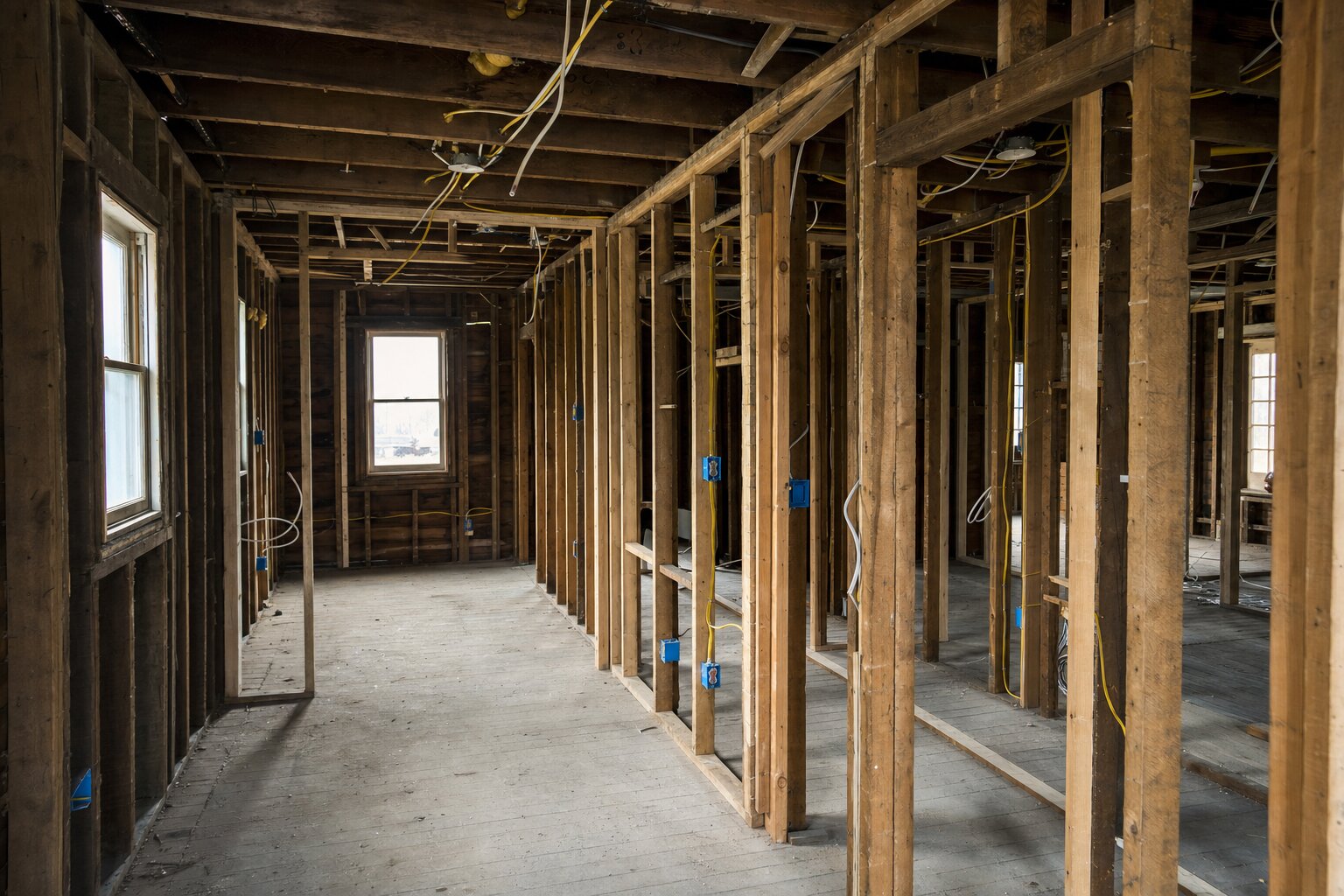
Structural trouble is the single biggest reason a remodel quietly turns into a money pit. There is no clean national dollar figure for it, because every older home fails differently. What we can tell you from building in this region is that once a slab is moving on expansive clay or a foundation needs major correction, the cost can climb past the point where a fresh build is the better buy.
The trap is that you cannot see most of it until demolition starts. A homeowner budgets for a kitchen and new floors, then we open a wall and find rotted sill plates, a cracked beam, or a foundation that has dropped two inches on one corner. Now the remodel has to pay for structural repair plus everything that repair disturbs. Add code-trigger work on top, and you can blow past the rebuild number.
Our rule of thumb is straightforward. If the bones are sound, remodel. If the foundation or main structure is failing across the whole house, get a real rebuild quote before you spend another dollar patching it.
What is the 50 percent rule, and does it apply to my lot?
The most important version of the “50 percent” rule is the FEMA floodplain rule. Under the FEMA National Flood Insurance Program, when improvement work costs 50 percent or more of the structure’s pre-work market value, the whole structure has to be brought up to current floodplain construction standards. In the Hill Country, that matters more than most places.
A lot of our creekside and riverfront lots near Blanco, Cypress, and the Wimberley waterways sit in mapped floodplains. If your older home is in one, a substantial remodel can legally force you to elevate or rebuild to flood code anyway. At that point you are paying rebuild-level money for a remodel, so an actual rebuild often makes more sense.
Outside a floodplain, treat “spending more than half the home’s value” as a general gut-check, not a code mandate. It is a sign you may be over-investing in an old shell, not a law. Either way, both a remodel and a rebuild in our area need Hays County permits, and the county will confirm whether the floodplain rule is in play.
How do lead and asbestos change the call?
Older homes carry materials that cost real money to handle safely. The EPA estimates about 75 percent of homes built before 1978 still contain some lead-based paint, and its Renovation, Repair and Painting Rule requires certified lead-safe work practices for paid jobs that disturb that paint. That is not optional, and it adds cost to any remodel of a pre-1978 home.
Asbestos is the other one. The EPA recommends inspecting for asbestos-containing materials before most demolition or renovation, because those materials release fibers when disturbed and were common in homes built before 1980. Think old floor tile, pipe wrap, and popcorn ceilings.
On its own, neither one decides anything. But when a pre-1978 home needs heavy lead and asbestos remediation across the whole house, that cost stacks on top of the structural and code work. Stack enough of it, and the rebuild number stops looking expensive.
Should I add on instead, and will it pay back?
Additions are where people most often over-improve. According to the 2024 Zonda Cost vs Value Report (2024), an upscale primary-suite addition costs around $339,513 and recoups only about 23.9 percent of that at resale. A midrange version near $164,649 recoups about 35.5 percent. You do not get most of that money back.
The same report shows curb-appeal projects out-earn interior work by a wide margin. A garage door replacement recoups roughly 194 percent, a steel entry door about 188 percent, and stone veneer around 153 percent. Even an upscale major kitchen remodel near $158,530 recoups only about 35 to 38 percent. So if resale is your goal, modest exterior work beats a big addition almost every time.
Here is the practical read. Add on or remodel when you are building the home you actually want to live in, and you accept you will not recoup it all. If you are renovating mainly to sell, keep the budget tight and aim it at the exterior. Do not pour rebuild-level money into a house the neighborhood will not pay for. Before committing either way, a 3D rendering of the finished layout lets you see what the money buys while changes are still cheap.
So which way should you go?
Remodel usually wins. It costs less than the $166-per-square-foot rebuild benchmark from NAHB (2025), it keeps the character of an older Hill Country home, and it reuses the structure you already paid for. For most sound homes, that is the right answer and the cheaper one.
Rebuild wins in four cases. When the foundation or main structure is failing across the house. When a pre-1978 home needs heavy lead and asbestos remediation. When the work triggers full code compliance anyway, like the floodplain 50 percent rule on a creekside lot. And when the remodel quote climbs toward new-build dollars per square foot. Iron C Construction does both whole-home remodels and ground-up rebuilds, so we can price both honestly and tell you which one your house and your budget actually point to.
Ready to get a straight answer on your home?
If you own an older home in Wimberley or anywhere across Greater Austin and the Central Texas Hill Country, the only way to settle the remodel-or-rebuild question is to price both against the same house. Iron C Construction, founded in 2020 by Robert Castro, has walked plenty of these older homes and given owners the honest call, even when the honest call is “this one is worth saving” or “this one is not.” Reach out to Iron C Construction for whole-home remodels and renovations and a clear-eyed look at what your project really takes.