
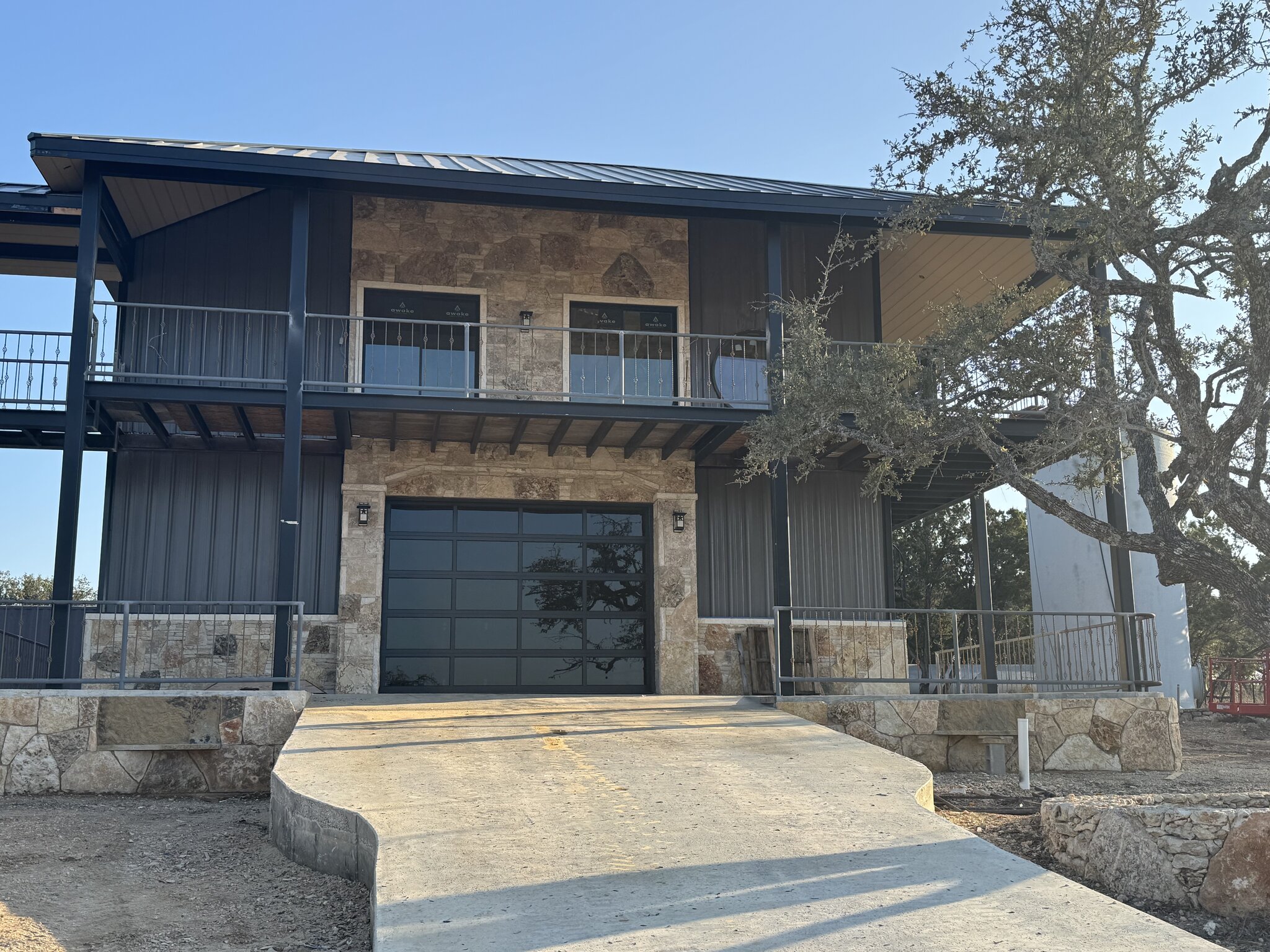
On a rural Hill Country build, the water well and septic system are not afterthoughts. They sit on the critical path right next to your slab. The septic permit decision is capped at 30 days, the state well report is due within 60 days of completion, and the order you do things in decides whether the foundation waits. Iron C Construction front-loads both.
Why do well and septic drive the build timeline?
When you build on raw acreage outside city utilities, you are not connecting to a main. You are creating your own water source and your own wastewater treatment, and each one carries its own permitting authority, its own licensed trade, and its own clock. The septic permit alone must be approved or denied within 30 days under TCEQ rules. Stack that against soil testing, well registration, and a drilling schedule, and you can see why the smart move is to start these early.
Iron C Construction has built on Hays County acreage since 2020, and the lesson is the same every time. The homes that move fast are the ones where the well and septic were sequenced before the slab, not squeezed in after. We coordinate the site plan and schedule the trades. The licensed drillers and registered installers do the regulated work.
What does the septic site evaluation actually involve?
Before anyone designs a septic system, a licensed site evaluator or professional engineer has to look at your dirt. Under TCEQ, an on-site sewage facility, or OSSF, must be site-evaluated before the design and permit can move. This is not a formality. It decides what kind of system your land can legally support.
The evaluation requires at least two soil borings or backhoe pits dug at opposite ends of the proposed disposal area, and more where the soils are variable, under TCEQ 30 TAC Chapter 285. Out here, those holes usually find rock sooner than a homeowner hopes. That single fact shapes the rest of the project, so we want it answered early while there is still room to adjust the house footprint. A planned casita belongs in that conversation too, since added bedrooms raise the septic design flow, one reason the casita rental math starts with septic.
Who permits the septic, the state or the county?
Most people assume the state runs septic permitting. It usually does not. Under TCEQ rules, a local authorized agent, typically the county, reviews the design, issues the permit, and inspects the install. In Hays County that means your paperwork goes to the county office, not to Austin headquarters.
That local layer matters for scheduling. The 30-day decision window starts when the authorized agent receives complete planning materials and the application, per TCEQ. Complete is the key word. A thin or sloppy submittal gets kicked back, and the clock does not help you if the package was incomplete. When you build on your lot with Iron C Construction, we assemble that package with the site evaluator so it lands right the first time.
Why does shallow rock force an aerobic system?
Hill Country limestone and caliche are the reason so many rural homes run an aerobic unit instead of a simple drainfield. A standard absorptive drainfield is considered unsuitable for poor-percolating or restrictive soils, which pushes the design to secondary treatment such as an aerobic unit or sand filter, per TCEQ. We cover what that rock does to the rest of the budget in what building on solid limestone adds to a custom home.
The numbers tell the story. A conventional drainfield generally wants around two feet of usable soil above a restrictive layer, while advanced systems are allowed with as little as roughly one foot to groundwater or about six inches to a restrictive horizon, under the TCEQ suitability table. On thin soil over rock, the math rarely supports a basic drainfield. That changes the system type, the cost, and the footprint, which is one more reason the soil borings come first.
How does the water well fit into the schedule?
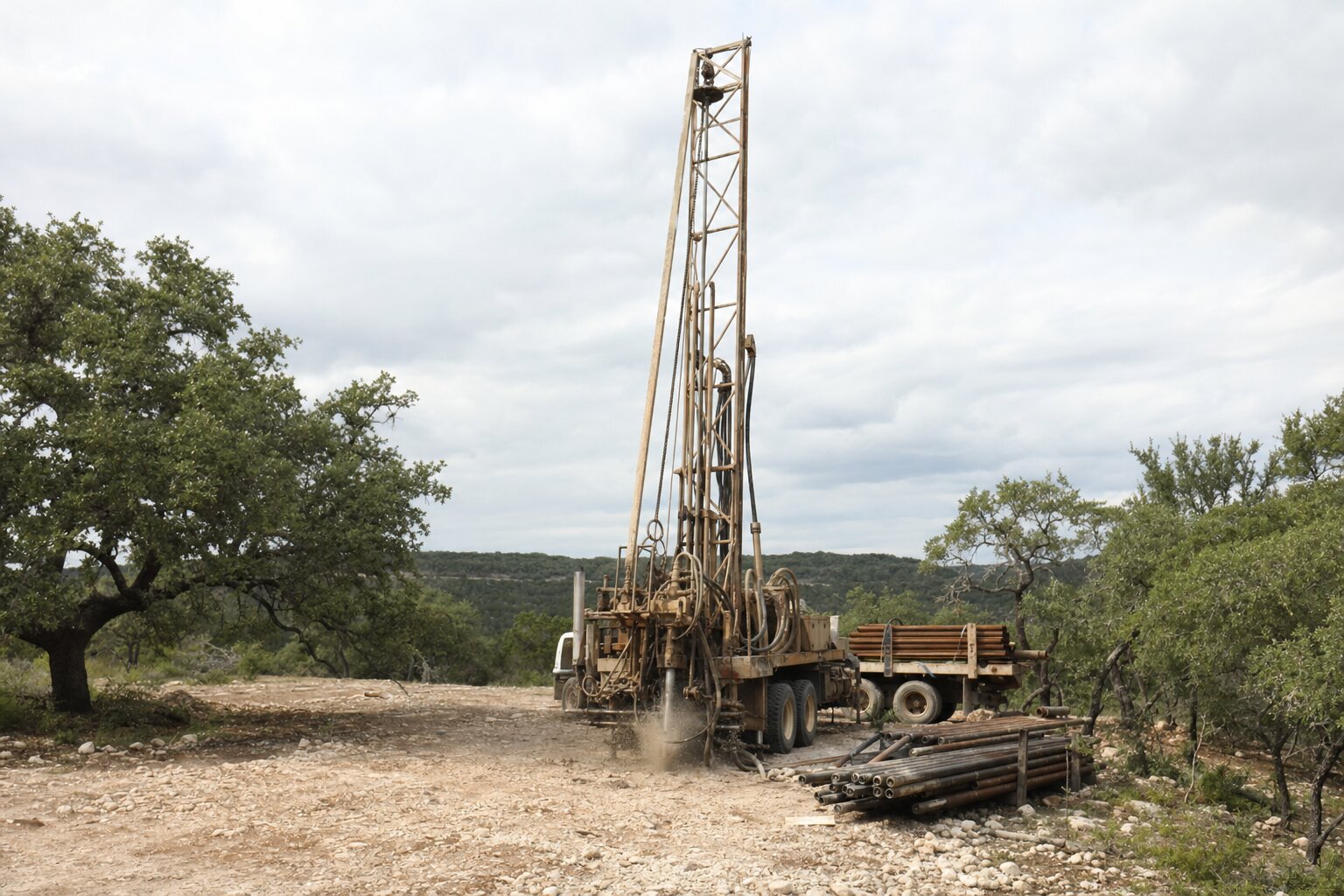
Drilling a well is a licensed trade, full stop. It is illegal to drill a well or install a pump without a license, and the work is regulated by the TDLR. Iron C Construction does not hold that license and does not pretend to. We schedule a licensed driller and fold their work into the build sequence.
Depth is the wild card. Trinity Aquifer wells in this area range from shallow all the way past 1,200 feet, and in western Hays County water levels have been falling, which pushes some wells deeper, per the TWDB. There is no single typical number to promise you. Two lots a mile apart can drill very differently, so we plan for a range rather than a guess.
After the well is finished, the paperwork is not optional. The driller must deliver the State Well Report, covering depth, lithology, and casing, to the TDLR, the owner, and the local groundwater district within 60 days of completion, under 16 TAC Section 76.70. That report is your record of what is in the ground.
Some Hill Country owners also add a rainwater catchment system alongside or instead of a well, which is its own design and plumbing decision. Whether you go well, catchment, or both, the point is the same. Your water source is part of the build, not a separate errand, and it belongs on the schedule from the start.
What about Hays Trinity groundwater rules and spacing?
In northern Hays County there is a local layer most homeowners do not see coming. All new wells must register with the Hays Trinity Groundwater Conservation District, and a Well Construction Notification covering spacing, setbacks, and a fee has to be filed before drilling starts.
Spacing is where the well and septic have to agree on paper. The Hays Trinity Groundwater Conservation District‘s rules (amended August 2026) put a typical home well 100 feet from adjacent property lines and 150 feet from existing wells, and state well rules keep it at least 50 feet from a septic tank and 100 feet from the drainfield. On a tight or oddly shaped lot, those distances can box in your house, your driveway, and your septic field all at once. We solve that on the site plan before anyone breaks ground. It is also worth checking the district’s current drought stage early, since new well permitting can be affected during emergency drought conditions, so confirm the rules in force when you apply.
How do you keep all of this from stalling the slab?
The answer is sequencing. The septic decision is capped at 30 days and the well report is due within 60 days of completion, per TCEQ and 16 TAC Section 76.70, but those clocks only help if everything upstream was started on time.
Here is the order that protects your schedule. Get the site evaluation and soil borings done early. Let the results set the septic system type and the house footprint. File the well registration and septic application as complete packages. Schedule the driller while the permit is under review. Lay out well and septic spacing on a single site plan so nothing has to move later. That is how Iron C Construction keeps water and wastewater off the critical path instead of on it.
If you are planning a custom home on Hill Country acreage, talk to Iron C Construction before you set a foundation date. We have been coordinating licensed drillers, registered septic installers, and county permitting on Hays County land since 2020, and we sequence all of it so your well and septic never become the reason the slab waits. Start the conversation about building on your lot and we will map the timeline with you.